
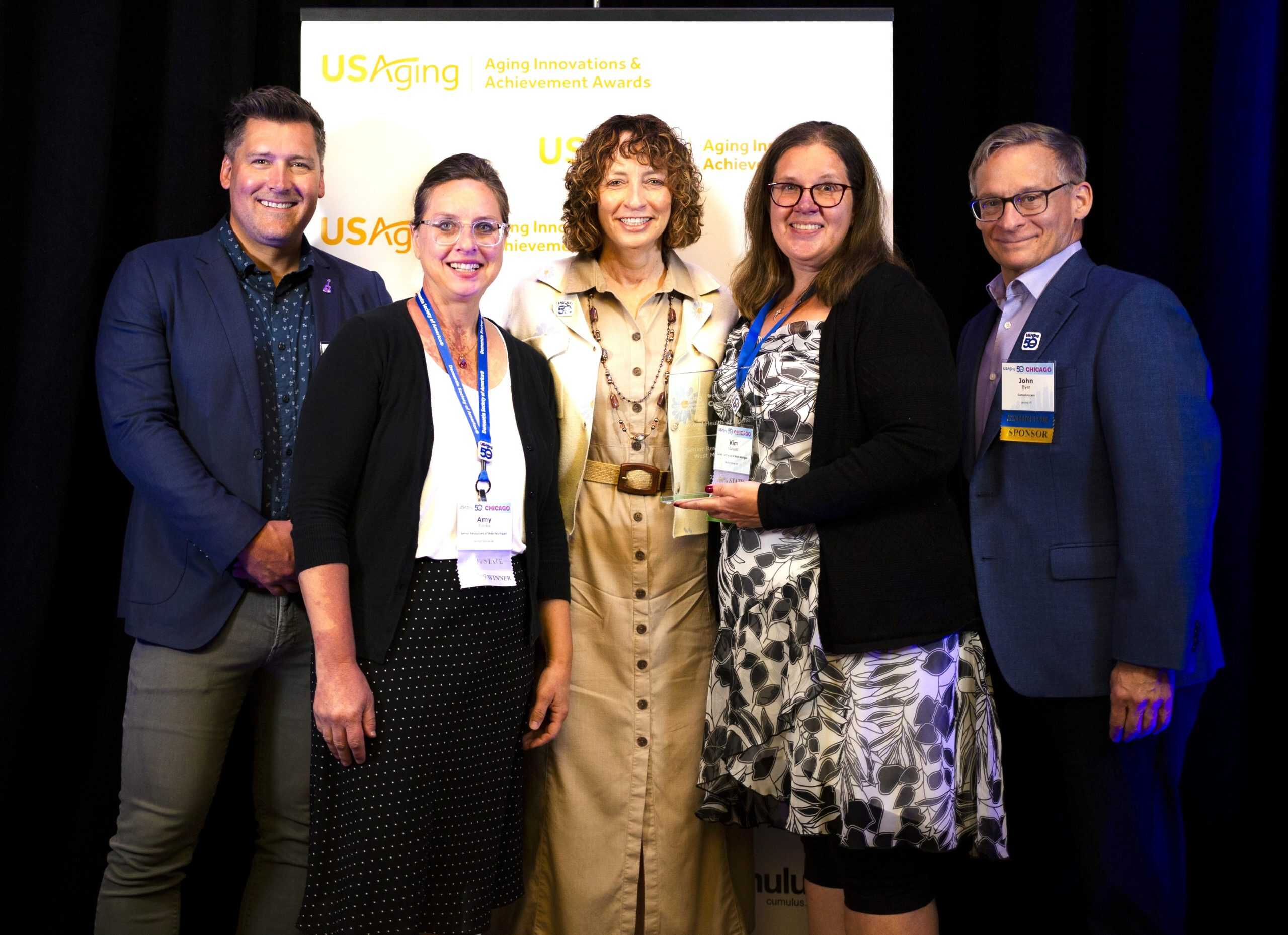
Senior Resources Honored with National Award for Behavioral Health at Home Innovation
Senior Resources of West Michigan has been recognized with a prestigious Aging Innovations & Achievement Award from USAging for its groundbreaking Behavioral Health at Home program. USAging is the national association representing Area Agencies on Aging, and this award highlights the most forward-thinking and impactful initiatives across the country.
Meeting a Critical Need
Recognizing the barriers that home-limited older adults face in accessing traditional behavioral health services, Senior Resources developed a three-pronged, person-centered approach to bring care directly to those who need it most. The program supports individuals dealing with anxiety, depression, substance dependence, and other behavioral health challenges.
A Collaborative, Three-Pronged Model
- Empower at Home: In partnership with the University of Michigan, this online, self-directed program pairs participants with a coach to guide them through nine modules of cognitive behavioral therapy. It’s designed for individuals with mild to moderate symptoms of anxiety and depression.
- Telehealth Access via FQHC: Working with a local Federally Qualified Health Center (FQHC), a community health worker delivers a device to the patient’s home, connects them to a counselor, and returns to collect the device—while also addressing social determinants of health.
- In-Home Counseling: For those with hearing, vision, cognitive, or connectivity limitations, Senior Resources arranges face-to-face sessions with licensed Master of Social Work counselors.
Funding and Impact
The program was launched with support from the Michigan Health Endowment Fund and additional community partner contributions. In Fiscal Year 2024, the initiative cost $146,206, covering salaries, outreach, technology, and more.
The results speak volumes:
- 460 in-home visits were completed, with an average reimbursement of $94.81 per visit.
- 45 telehealth referrals were made through the FQHC.
- 25 individuals completed the Empower program.
- Most participants doubled their quality-of-life scores after three months of counseling.
A Model for Replication
This innovative model is not only effective—it’s replicable. Other Area Agencies on Aging can pursue similar programs through grants or fee-for-service billing via Medicare, Medicaid, and health plans. As the Empower program moves toward evidence-based status, it may soon qualify for Older Americans Act Title III D funding.
The biggest hurdle? Navigating the process of becoming a Medicare provider and credentialing with health plans.